
Key Takeaways
- Meibomian glands that line your eyelids produce oils that keep tears from evaporating too fast.
- When those glands get blocked or damaged, dry eye symptoms may follow.
- Meibography uses infrared imaging to capture detailed pictures of your meibomian glands without contact or drops.
- The exam typically takes only a few minutes and has no downtime.
- Early detection helps protect your long-term eye health.
Your eyes feel dry and scratchy, and the drops from the pharmacy just aren’t cutting it. That frustration is familiar to a lot of people, and it often points to something happening beneath the surface of the eye, specifically inside the tiny glands along your eyelids. The Eye Care Team uses meibography to get a clear look at exactly what’s going on so dry eye care doesn’t have to be a guessing game. If you’ve been managing symptoms without answers, a closer look at your dry eye therapy options may be the next step.
Meibography is a noninvasive imaging exam that allows your eye doctor to see the meibomian glands that line your eyelids more clearly to find the root cause of dry eye. It’s a practical diagnostic tool that takes the guesswork out of dry eye care and helps your eye doctor build a plan that actually fits your situation.
The Link Between Meibomian Glands and Dry Eye
Tucked along your upper and lower eyelids, meibomian glands produce oils that coat the surface of your tears. That oil layer slows evaporation, which keeps your eyes comfortable and your vision clear throughout the day.
What Happens When They Stop Working?
When those oils become blocked or too thin, tears evaporate faster than they should. The result is the dry, gritty, irritated feeling that makes it hard to get through a workday or enjoy time outdoors. Over-the-counter drops may ease symptoms temporarily, but they don’t address the glands themselves.
What Is Meibography?
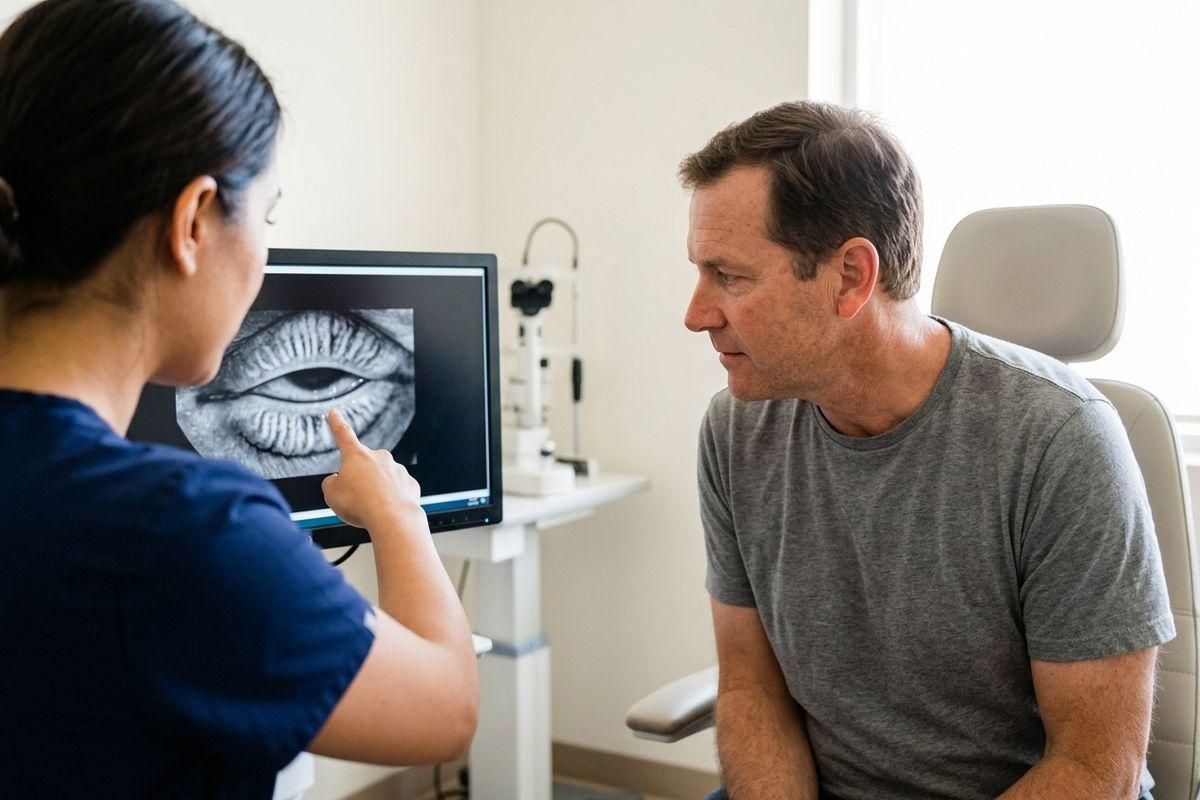
Meibography uses infrared light to capture detailed images of the meibomian glands without touching your eye. There are no drops, no contact with the eye, and no discomfort. The images show the glands in a way that a standard eye exam simply can’t.
What It Measures
The images show the size, shape, and structure of each gland. Your eye doctor can also assess tear film stability and the thickness of the oil layer. Most importantly, the exam reveals whether any gland loss or damage has occurred, which directly shapes what treatment makes sense for you. Meibomian gland dysfunction is one of the more common contributors to dry eye, and meibography gives your eye doctor a direct way to confirm it.
What to Expect During a Meibography Appointment
The Process, Step by Step
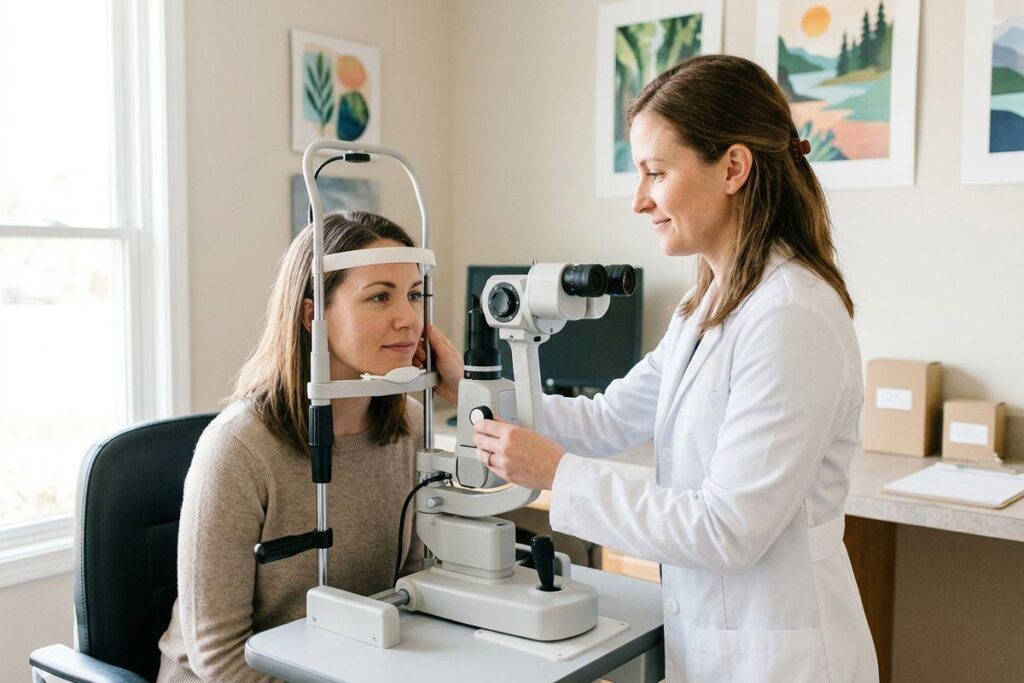
You rest your chin on a support and keep your gaze forward while each eye is imaged one at a time. The whole process typically takes only a few minutes. There’s nothing to prepare for and nothing to worry about going in.
Comfort and Recovery
The exam is simple, and most people feel nothing at all during it. There’s no downtime afterward, so you can drive yourself home and go about your day. Your results are available right away, which means you and your eye doctor can talk through next steps during the same visit. If you’re curious about how long an eye exam takes, most meibography appointments fit comfortably within a routine visit.
How Meibography Guides Dry Eye Treatment
From Diagnosis to a Personalized Plan
Once the images are ready, your eye doctor reviews them to confirm whether meibomian gland dysfunction, often called MGD, is present. Knowing the severity upfront helps your eye doctor choose a treatment approach that fits your gland health. The images also become a reference point so our team can track changes over time and adjust care as needed. Treatments like LipiFlow and OptiLIGHT are often considered once the extent of gland involvement is clear.
Why Early Detection Matters
MGD tends to worsen without treatment. Catching it early can protect your long-term eye health and help reduce the risk of corneal damage down the road. The sooner the glands are assessed, the more options are available to support them. If you’re unsure whether your symptoms warrant a visit, knowing when to see a doctor for dry eye can help you decide.
When to Ask Your Eye Doctor About Meibography
Signs Worth Bringing Up
If any of the following sound familiar, it’s worth mentioning at your next appointment:
- Your eyes feel dry, gritty, or scratchy on a regular basis.
- Drops alone haven’t improved your symptoms.
- Dry eye discomfort is getting in the way of daily activities.
Who Can Benefit from This Exam
Meibography isn’t just for one type of patient. Adults of any age who deal with recurring dry eye can benefit from a closer look at their gland health. It’s also a practical option for anyone who wants to understand the root cause of their symptoms rather than just manage them. Families looking for proactive eye care in Spokane and Chewelah can ask The Eye Care Team about whether this exam fits their needs.
We Can Help
At The Eye Care Team, our goal is to give you a clear picture of what’s going on with your eyes so you can make informed decisions about your care. If dry eye has been an ongoing frustration, reach out to schedule an appointment and ask whether meibography is right for you.