



Key Takeaways
- Astigmatism happens when the cornea or lens has an uneven curve, causing blurry vision at multiple distances.
- Contact lenses can be a practical option for people with astigmatism, especially those with active lifestyles.
- Toric, rigid gas permeable, and aspheric lenses are all options depending on your level of astigmatism.
- A proper eye exam and fitting are key to finding a lens that works for your eyes and your life.
If you have astigmatism, you may have heard that contact lenses aren’t really an option for you. That’s a common concern, but it’s not the full picture. The Eye Care Team works with a wide range of prescriptions, and there are several lens types designed specifically for eyes like yours. The right one depends on your prescription, your lifestyle, and how your eyes respond during a contact lens exam and fitting.
Contact lenses can work well for astigmatism, and an optometrist can help you find the right type for your needs. Whether your astigmatism is mild or more significant, you have real choices worth exploring.
What Astigmatism Does to Your Vision
How Eye Shape Affects Focus
With astigmatism, the cornea or lens has an uneven curve. Instead of bending light to a single sharp point, it scatters it. The result is blurry or distorted vision at more than one distance. You might notice it most when reading or driving at night. Astigmatism is one of the more common refractive conditions an eye doctor sees.
Causes and Risk Factors
Genetics can play a role in whether you develop astigmatism. Eye injuries may also contribute. In many cases, people are born with it and simply don’t realize it until an eye exam catches it.
Why Contact Lenses Work Well for Active Lifestyles
Glasses are a solid choice for many people, but they do have limitations when you’re moving around. Contact lenses sit directly on your eye, which changes the experience quite a bit.
- You get a wider field of view without frames blocking the edges of your sight.
- They stay in place better during sports and physical activity, which glasses often don’t.
- There’s no fogging when you walk indoors from cold weather or wear a mask.
If you spend time outdoors, play recreational sports, or just find frames inconvenient, contacts can be worth looking into. The sports and specialty eyewear page is also worth a look if you need eye protection built around your activity level.
Types of Contact Lenses for Astigmatism
Rigid Gas Permeable Lenses
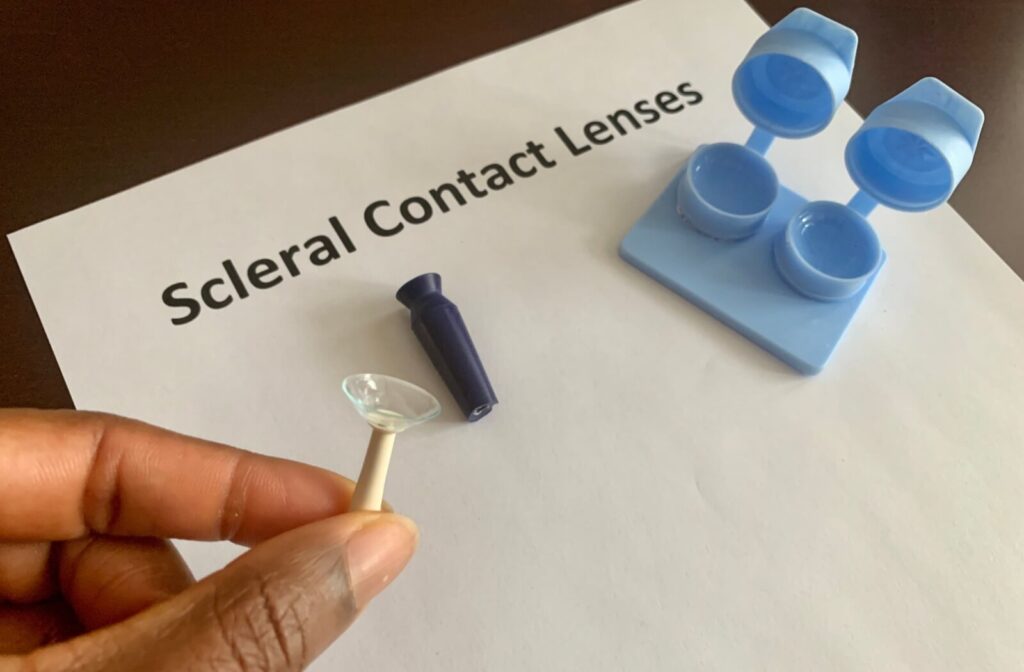
Rigid gas permeable lenses, often called RGP lenses, hold their shape on your eye rather than conforming to it. That consistency can make them effective for correcting astigmatism. They tend to take longer to get used to than soft lenses, so patience is part of the process.
Toric Lenses for Moderate to Severe Astigmatism
Toric lenses are designed to address both horizontal and vertical astigmatism correction. They’re available in soft and RGP materials, giving you options based on comfort and prescription. Because they need to stay oriented correctly on your eye, a precise fitting matters more with toric lenses than with standard contacts. The different contact lens types each come with their own fit and wear considerations worth knowing before your appointment.
Aspheric Lenses for Mild Astigmatism
If your astigmatism is on the milder side, aspheric lenses may be enough. Their curvature gradually shifts from the center to the edge, which helps reduce optical distortion without requiring the toric design. They’re worth discussing if your prescription falls into that lighter range. Mild astigmatism and contact lens options are covered in more detail if you want to dig deeper before your visit.
How We Find the Right Lens for You
Finding the right contact lens isn’t a guessing game. It starts with a thorough eye exam that measures your specific level of astigmatism. From there, your optometrist factors in your prescription and your day-to-day lifestyle to narrow down which lens types make sense for you.
Fitting is especially important with toric lenses. A lens that doesn’t sit properly won’t correct your vision the way it should. Your eye doctor takes careful measurements to help make the fit accurate before you leave with a prescription. Keeping up with proper contact lens care after your fitting also plays a big role in keeping your eyes comfortable and healthy long term.
Your Next Step Toward Clearer Vision in Spokane and Chewelah
The Eye Care Team serves patients across Spokane and Chewelah, and we work with a wide range of prescriptions and lifestyles. If you’ve been told contacts aren’t for you, or if you’ve never had a contact lens fitting before, it’s worth having that conversation.
Contact lens options for astigmatism have expanded, and what wasn’t a great fit a few years ago might work well for you now. Reach out to schedule an appointment with an eye doctor in Spokane or Chewelah, and explore what’s available for your eyes.