

That gritty, uncomfortable feeling in your eyes can be more than just a minor annoyance. If your eyes consistently feel irritated and tired, it might be a sign of a common condition known as dry eye. Our professionals at The Eye Care Team know how frustrating it can be, and want you to understand what’s happening so that you can start finding relief.
You may have dry eye if you often experience a stinging or scratchy sensation, redness, light sensitivity, or watery eyes. These signs can point to an issue with your tear quality or production, which is necessary for keeping your eyes healthy and your vision clear.
What Dry Eye Feels Like
When your eyes don’t produce enough tears (or the right kind of tears), you feel it. This discomfort can affect all your daily activities, from reading a book to driving to watching a movie. Paying attention to these feelings can help you understand what’s happening with your vision.
Common Signs of Dry Eye
Though everyone experiences dry eye differently, some of the most frequent indicators include:
- A stinging, burning, or scratchy feeling
- Redness or general eye irritation
- Sensitivity to light
- The sensation of having something in your eyes
- Difficulty with nighttime driving
- Watery eyes, which can be your body’s response to the irritation
- Blurry vision or eye fatigue
What Triggers Dry Eye Symptoms
Different factors in your environment and daily routine can contribute to dry eye. Your eyes rely on a steady, protective layer of tears, and when that tear film is disrupted, you feel dry eye symptoms.
Your Environment and Daily Habits
Your surroundings and habits play a big role in your eye comfort. You may notice symptoms flare up when you:
- Spend long hours on digital screens like computers or phones
- Are exposed to wind, smoke, or very dry air
- Wear contact lenses for extended periods
Health and Age Factors
Changes in your health can also affect your eyes. For many people, dry eye is linked to:
- The natural aging process
- Certain health conditions
- Side effects from some medications
How to Notice Dry Eye Signs at Home
You can observe a few things on your own that might point to dry eye. While these observations are not a formal diagnosis, they can help you describe what you’re experiencing.
The Blink Rate Check
Try to notice how often you blink when you’re focused on a task, like working on a computer. You tend to blink less often when staring at a screen, which can lead to symptoms of digital eye strain, such as burning or fatigue. Making a conscious effort to blink more can sometimes provide temporary relief.
A Look in the Mirror
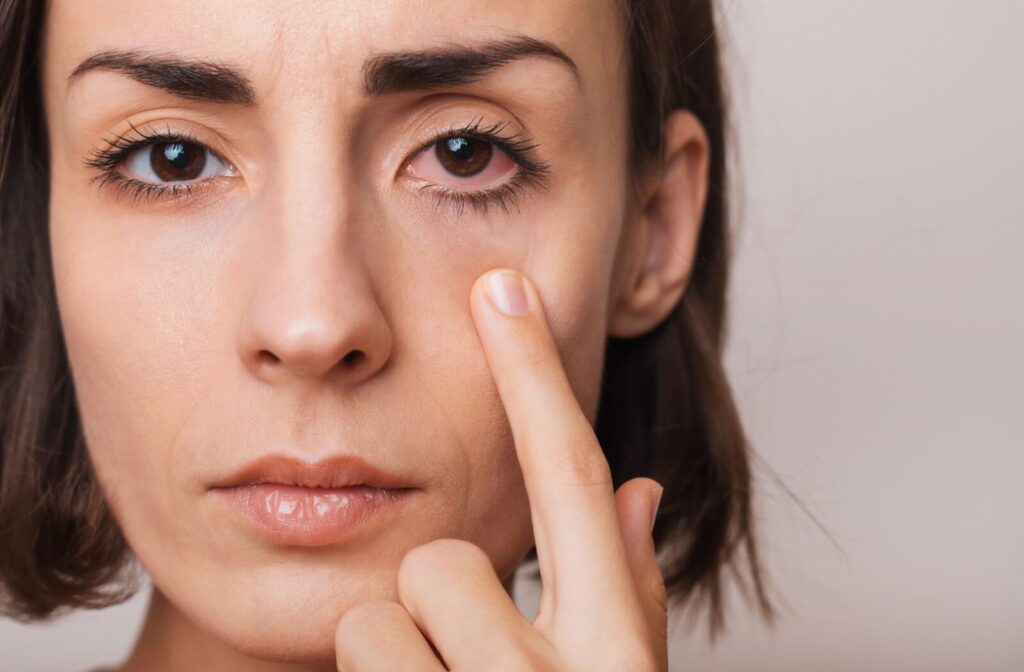
Take a moment to look at your eyes in the mirror. Persistent redness is a common sign, but you might also notice stringy mucus in or around your eyes. Strangely enough, very watery eyes can also be a symptom, as your eyes produce extra tears to combat the irritation from dryness.
Conditions That Seem Like Dry Eye
Sometimes, what feels like dry eye could be related to another condition. It’s helpful to distinguish between them because each condition has different treatment options.
Eye Allergies
Watery and red eyes are common with both eye allergies and dry eye. However, allergies often come with other symptoms, like the urge to itch your eyes, sneezing, or a stuffy nose. The triggers are also different: Allergies are a reaction to things like pollen or pet dander.
Digital Eye Strain
After a long day of screen time, your eyes might feel tired, blurry, and uncomfortable. These symptoms overlap with dry eye but may be tied directly to your use of digital devices. Frequent breaks and proper screen habits can help you feel more comfortable.
Find a Proactive Plan for Healthy Eyes
A combination of at-home adjustments and professional care can make a noticeable difference in how your eyes feel every day. There are many ways to manage symptoms and support your long-term eye health.
Simple Lifestyle Adjustments
A few small changes in your routine can offer relief for some people. You can start with these simple steps:
- Take regular breaks from screens using the 20-20-20 rule
- Use a humidifier to add moisture to the air in your home or office
- Stay hydrated by drinking plenty of water throughout the day
Your Partner in Eye Health
If your symptoms are persistent and don’t respond to at-home adjustments, a comprehensive eye exam might be your next step. The Eye Care Team can assess your tear production and quality and provide a personalized plan to support healthy, comfortable eyes. For families seeking a dedicated eye doctor in Spokane and Chewelah, book your appointment today.